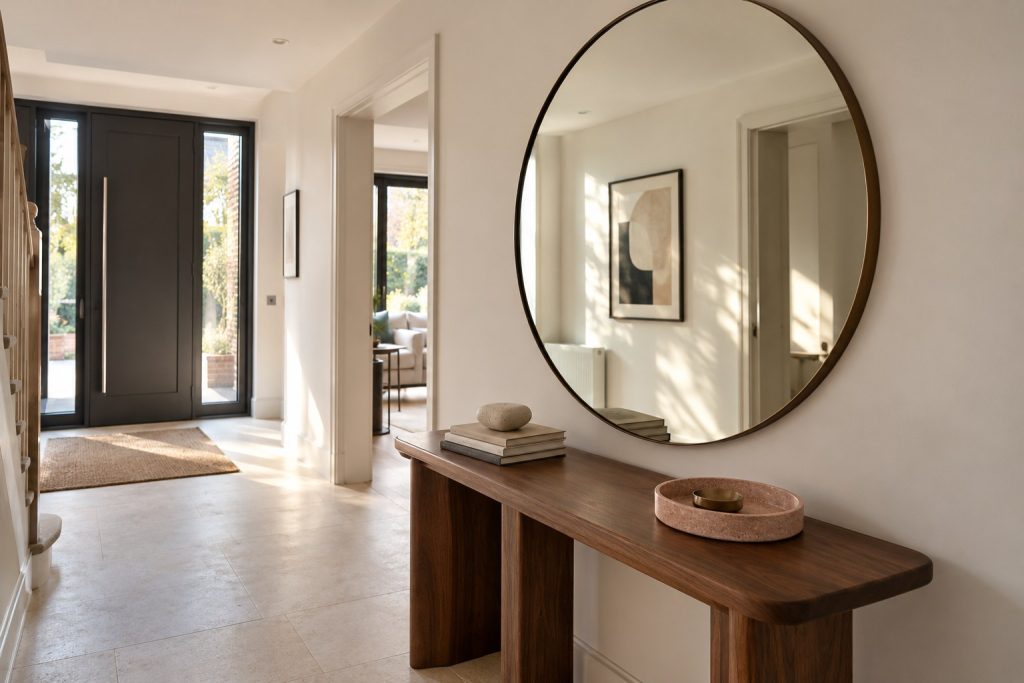
Mirrors in Feng Shui: What Is Your Home Reflecting?
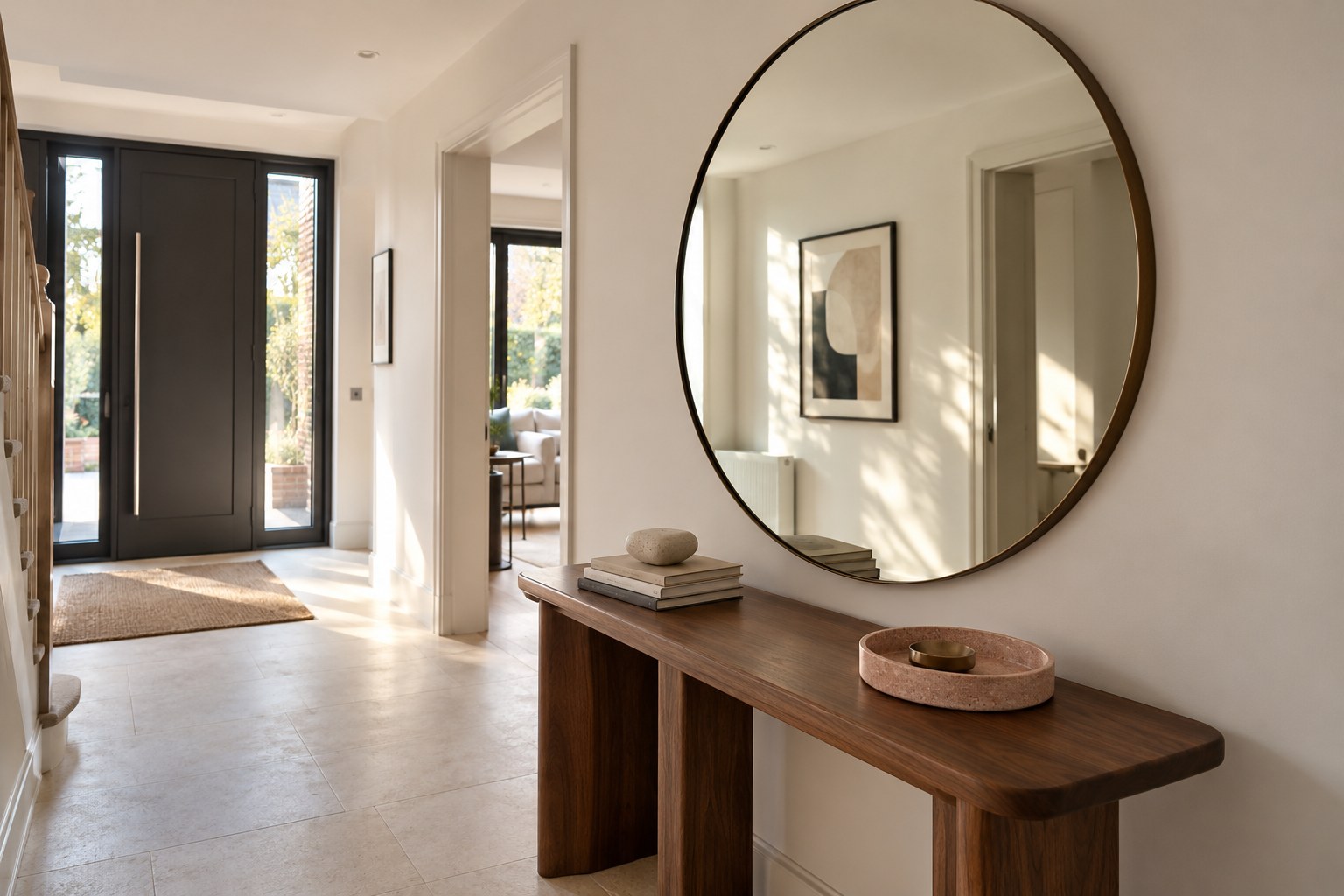
A mirror can make a narrow hallway feel more open. It can also give you a second view of the shoes you keep meaning to put away. Before deciding whether a mirror belongs on a particular wall, take a moment to look inside it.
When I consider Feng Shui mirror placement, I start with three questions. What does the mirror reflect? Where will you see that reflection? And does it suit what you use the room for?
It is easy to choose a mirror because its frame works with the furniture. The reflected view deserves just as much attention. A beautiful mirror can still feel awkward if it catches a harsh light, repeats a busy corner or surprises you every time you walk past.
Feng Shui mirror placement: start with the reflection
Stand where you normally enter the room, then sit where you spend time. The image in the mirror will change with your position. A reflection that looks lovely in a photograph may be quite different from your usual seat on the sofa.
Notice what becomes more prominent. Perhaps the mirror brings a quiet view of the garden into the room. Perhaps it repeats the television, an open storage unit or the kitchen worktop. It is worth looking at the ordinary details first.
Try moving the mirror slightly along the wall or testing a different height before fixing it in place. Sometimes a small shift changes the reflected view more effectively than buying a larger mirror.
The view
What appears in the glass from the places you actually use?
The light
Does it add useful brightness or put glare in your eyes?
The activity
Does it repeat a calm part of the room or its busiest corner?
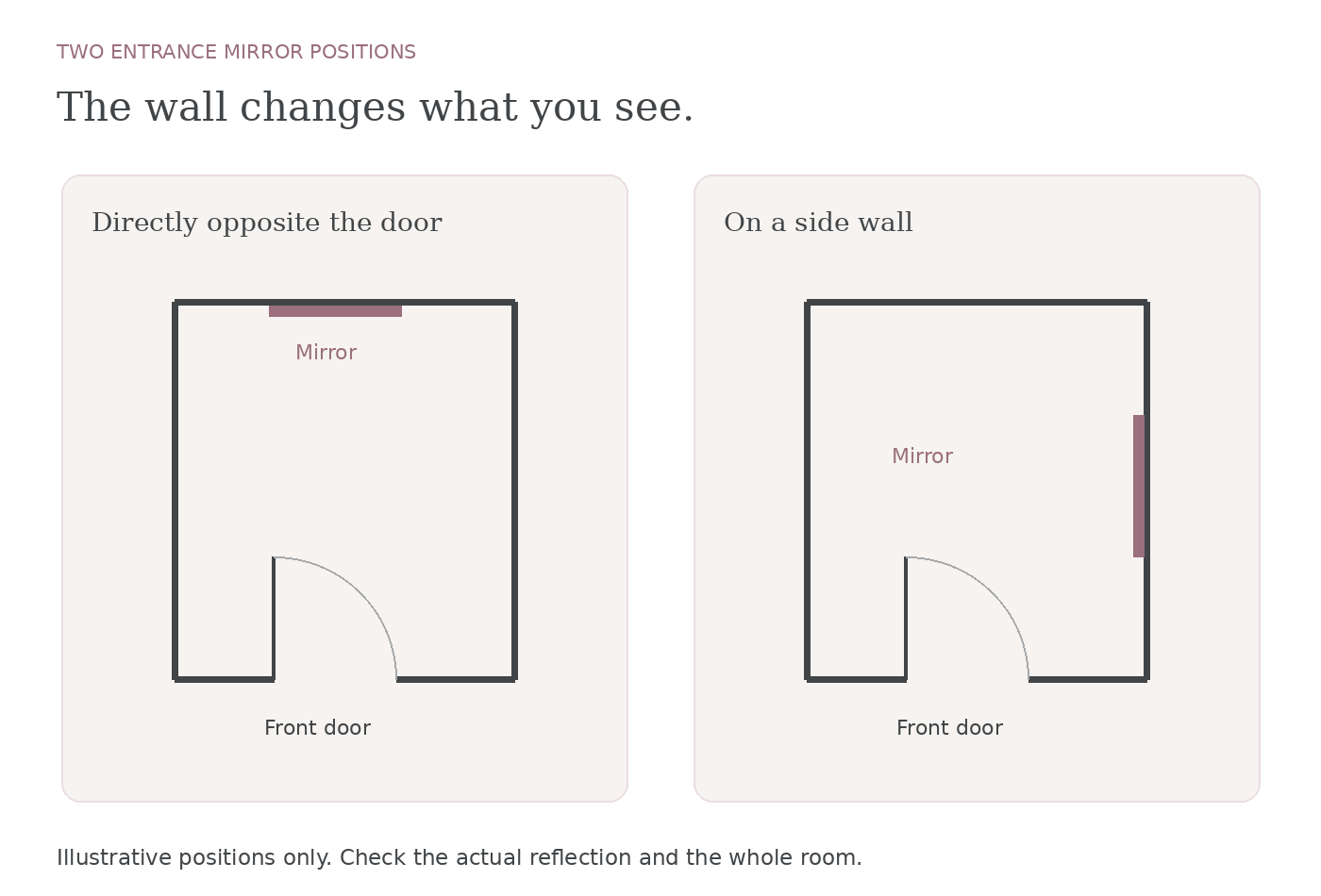
A mirror in the hallway: opposite the door or beside it?
You will often hear that a mirror should not face the front door. In Feng Shui approaches that use this rule, the explanation is that incoming qi is reflected back out. I would look at that advice alongside the entrance itself: the space available, the reflected view and the way people move through it.
For a practical starting point, try a side wall. You can check your appearance before leaving without meeting your own reflection straight ahead as you come in. Make sure the mirror and console leave room for bags, coats and the opening door.
If the hallway already feels crowded, deal with the shoes and coats before adding another large object. Leave enough space to come in comfortably with shopping bags or a pushchair.
Living room mirrors: check from the sofa
A mirror near a window may bring a brighter view into the room, but look at it at different times of day. Direct sunlight or the reflection of a bright lamp can become uncomfortable from a favourite chair.
Also check the television. If the mirror repeats its moving image, a quiet seating area can feel busier than you intended. Changing the angle of a freestanding mirror, or choosing another wall, may give you a gentler view.
Think about the room after dark as well. The daytime garden reflection may become a reflection of interior lights once the curtains are closed. The mirror needs to suit both versions of the space.
Does a dining room mirror really double abundance?
The idea of a dining mirror “doubling abundance” comes from the symbolism used in some Feng Shui approaches. A table shared with family or friends can represent nourishment and having enough. I would treat that as a symbolic reading, rather than a prediction about money.
There are more useful questions to ask before hanging one. Does it reflect the shared table, a view you enjoy or a comfortable part of the room? Or does it repeat the washing-up, an overflowing sideboard or an exposed light bulb?
Check the height from a dining chair. People should be able to enjoy a meal without an unwanted reflection or glare becoming the centre of attention. The reflection should feel comfortable to the people sitting at the table.
Are round mirrors better than rectangular ones?
A round mirror can soften the appearance of a hallway with strong straight lines. A rectangular mirror may work better above a long console or for checking your full outfit. I would choose between them by looking at the proportions of the wall and the view in the glass.
Choose the size and height for the people who use it. Check that you can see what you need to see without bending or standing on tiptoe. If several people share the home, test the view at different heights.
Clear glass is usually the simplest choice for an everyday looking mirror. Decorative panels, smoked glass and distressed finishes create a different effect; decide whether you want a useful reflection, an artwork or a deliberately muted surface.
What about mirrors facing each other?
Opposing mirrors create repeated reflections. Some Feng Shui approaches avoid this because it is interpreted as overly active. You can also assess the visual effect directly: does the repetition feel interesting, distracting or confusing when you use the room?
In a narrow passage, that repetition can be quite a lot to take in. Try repositioning one mirror and walk through again. Keep the arrangement that feels easier to use.
A brief note on bedroom mirrors
Some schools prefer to avoid a mirror reflecting the sleeper. If you have mirrored wardrobes, check the view while lying down rather than judging them from the doorway. Notice whether reflected light or movement bothers you.
Repositioning a smaller mirror is an easy experiment. A safely secured temporary cover can help you compare how the room feels at night. With fitted wardrobes, begin with a small, reversible change and see whether you prefer the room that way.
Why I would look at the whole room
Mirror advice can sound contradictory because it often comes from different Feng Shui methods. A recommendation about reflecting qi may sit beside another about the Five Elements, without either explaining which approach it uses.
Before choosing a compass sector for a mirror, I would want to understand the room and the wider home. Who uses it? What happens there? What is the proposed change meant to improve? Those questions make the recommendation more useful than a direction on its own.
A Bagua mirror needs a separate conversation. It is a specialised object, and I would want a clear reason for recommending one. Choosing a decorative mirror for your hallway does not mean you need to add a Bagua mirror above the door.
A five-minute mirror check
- Walk in. Look at what the mirror shows as you enter.
- Sit down. Check the reflection from the sofa, dining chair or another usual position.
- Check the light. Look again in daylight and with the evening lamps on.
- Check the space. Keep the door swing and walking route clear, and mount the mirror securely.
- Change one thing. Test another position or clear the reflected area before buying anything new.
After these checks, you should have a clearer idea of what the mirror adds to the room and whether a different position would work better.
If you are starting with one room, choose the mirror you see most often. You may discover that the simplest improvement is on the opposite side of the room, in the part it reflects.
Where would a mirror work in your home?
If you are unsure which wall to choose, a Mini Consultation gives us time to look at one or two rooms together and consider practical changes around your layout.